No, I don’t mean goin’ south to Miami. Or even Mexico.
I’m talkin’ about south of the equator. The southern hemisphere.
South latitude in my navigator days. Minus latitude today.
In 1963, I had never been south of the equator.
New Yorker that I was.
I was a qualified, but rather junior, lieutenant naviguesser in the C-130 aircraft outta Charleston AFB.
Then I was assigned to an airlift mission to Johannesburg, South Africa.
We were to fly to Patrick AFB, Florida to pick up initial cargo, then on to Recife, Brazil—which lies at about 8 degrees south latitude.
Then to Ascension Island, out in the South Atlantic Ocean (affectionately called “the moon” by aircrews).
Then Leopoldville, Congo (now Kinshasa), and finally to Joburg, as we called it.
The mission was in support of the U.S. space program of the 1960s.
So what’s so different about the southern hemisphere?
Well, for one thing, the seasons are reversed.
Winter is summer. Spring is fall.
Not so noticeable in tropical climates, but in South Africa, Argentina, Australia, and New Zealand, it’s quite obvious.
Takes a little getting used to.
As a budding navigator, celestial navigation was especially intriguing.
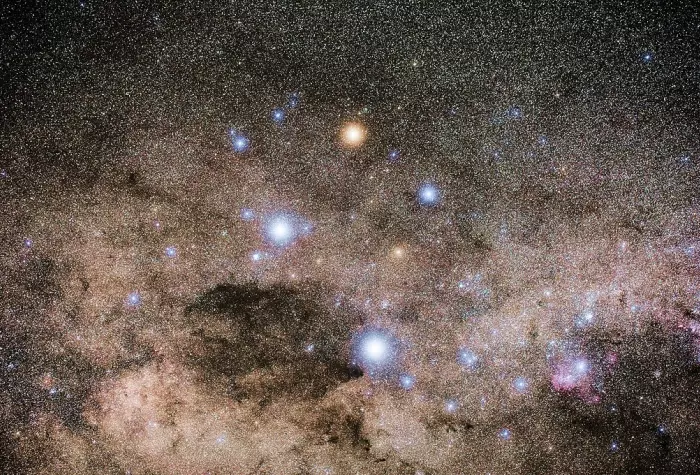
A whole different set of stars is visible south of the equator.
The most famous and prominent of these is Crux, more commonly known as the Southern Cross (yes, there’s a Northern Cross as well).
Using the periscopic sextant, kept on board our C-130 aircraft, to shoot stars in the Southern Cross and navigate the South Atlantic–well, that was a once-in-a-lifetime experience.
(Well, maybe thrice in a lifetime, since I flew that route at least three times in my 5,000 hours of flying.)
Another phenomenon that was allegedly different south of the equator?
Coriolis force.
That’s an apparent force to the left or right due to measuring straight lines on a spinning spherical globe.
The active myth among aircrews was that toilets flushed counter-clockwise south of the equator.
I never got the chance to test that… or maybe I just didn’t think it was important enough to try.
We did have to account for Coriolis in several of our celestial navigation computations though…so it wasn’t all myth.
Back to Recife, Brazil.
Eight degrees south latitude is pretty close to the equator. Hence, pretty damn hot.
Bad sunburns were common among aircrews crew-resting on the beach in Recife.
And let me tell you, getting a sunburn bad enough to impair your ability to do your aircrew job (pilot, navigator, engineer, or loadmaster) was a potential court-martial offense.
So yeah, the beach was beautiful, but you had to be careful not to overdo it.
Enuf.

I loved your term naviguesser! Also found that navigating south of the equator was different. Never thought of that before. Did you really navigate using a sextent?
You betcha. Celestial navigation was all we had flying the North or South Atlantic. Ya see, I’m old.
I especially liked 3-star navigation at night. But I shot the sun, moon and even Venus in the daytime. Our sextant was periscopic not hand held.
I told the story when I had a student nav, who I thought knew what he was doing. I let him work on his own for a couple hours after takeoff from Charleston.
He calmly told me about two or three hours in mid Atlantic, Don, I don’t know where the hell we’re at “. I asked calmly,” when was the last time you knew? He answered, “Right after we took off. “. Holy s–t, I thought
I had been monitoring our direction and airspeed, so I guessed our approximate location. ( Hence, Naviguesser)
I had him compute a celestial fix while watching. I got the sextant up and shot three stars ( luckily it was a clear night). We soon had our position fixed and we weren’t too far off course. I watched him closely for the rest of the mission. A learning experience for both of us.
Today GPS does all that. No need for navigators.
AI may replace pilots next.